The Truth About Being Creatively Stuck

What do you do when you’re experiencing momentum and suddenly you hit a wall? If you’ve ever had your creative pipeline just shut down unexpectedly keep reading because this is for you. Before we take a deep dive into this peculiar circumstance it’s worth noting that creativity doesn’t behave in a consistent manner. It comes in waves. It ebbs and flows. It peaks and pulls back. It’s unpredictable energy that works in mysterious ways and often on its own terms.
Experienced artists learn how to seize upon this magic and its abundant flow. Other times it has a way of stopping abruptly leaving a feeling of emptiness and uncertainty. So, what’s the takeaway? Our creative power should never be taken for granted. When you are in the flow of creativity take advantage of the moment. There’s a good chance there will be a pause between the next time you experience this blessing. Sometimes it’s hours, days, months and in severe cases years.
It’s a grim assessment of a common problem all artists deal with. However, the good news is no matter how long or how short these creative short-circuits take place they can be easily fixed. I ought to know, I’m experiencing my own battle with this phenomenon now. Rather than writing it off as another episode I must endure and strive to get over, I decided to look deeper into what is happening with me. Normally I would think of this as a personal flaw which I brought upon myself while applying some finger shaking at myself.
What I found out totally changed how I viewed this process. Instead of shaming myself, I was able to ease back into my work as if nothing happened at all. There was no need to pump myself up and try to motivate myself, which can lead to greater resistance and disappointment. Instead, I learned the science associated with this subject. Taking the time to learn from how this works saves you from self-deprecation and shame.
Here’s how it works. The Goal Gradient Theory was discovered by Clark Hill who saw how rats in a controlled environment ran faster towards their food the closer they get to their food or reward. This same behavior is true in humans in that we naturally increase our efforts to reach our goals the closer we get to them.
With every goal we set out to achieve we tend to start out strong, slow down in the middle and pick up pace as we get near the end.
If you’ve ever run a race, especially long distance, you know everyone starts out strong. Somewhere in the middle pacing slows down and fatigue starts settling in. You start feeling the pain and questioning your motivation. Then, you turn a corner, and you see the finish line in the distance, and you begin working harder and applying greater effort. The reward we are looking for is in our line of sight which makes us more motivated to achieve it.
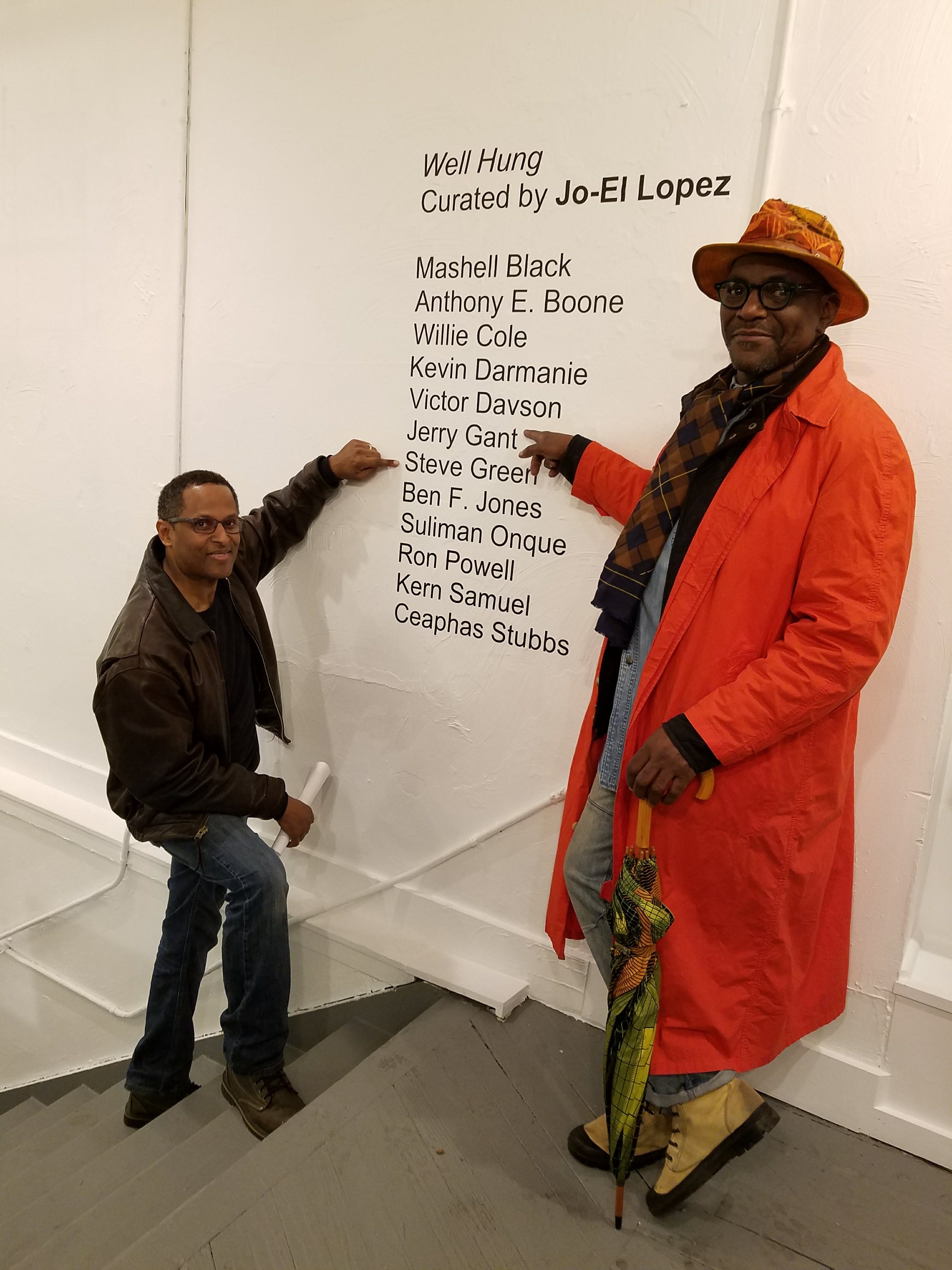
When I was offered my solo art show this year, to say I was excited was an understatement. I at once set ambitious goals and guardrails to keep me accountable to achieving them. One of my goals was to complete one hundred paintings to curate my show from. After-all, I was practically given a full year to create new work, so why not? Since January I can truly say everything has been going as planned. New work has been produced consistently, and I seemed to enter a flow in my work when I entered my studio. Then suddenly it all came to a screeching halt. It was as if creativity slammed on the brakes and the vehicle came to a violent halt.
This is where I met my middle. At first it was disorienting. Just shy a few paintings from my one hundred and for the last few weeks I’ve had nothing to say, nothing to do. Just silence. I couldn’t believe this was happening to me. There I was, slowing down, feeling fatigued, and starting to worry if I was losing my motivation.
Believe it or not, this is normal in all creative processes. The Gradient Theory addresses these factors whether you are building a business or planning out any project.
Everything has a middle and that’s where you’ll be tempted to quit. Don’t quit, keep moving forward.
What I learned from The Gradient Theory is we tend to focus on what’s left to do rather than how far we’ve come. For instance, my focus wasn’t on the forty-seven paintings I completed. I began to panic about the fifty-three pieces I had yet to complete.
If you find yourself where I am now, what can help you get back on track is take a moment and celebrate how far you have come. It really works and it helped me put my vision in perspective. Celebrate what you have already achieved, and this will give you the motivation to keep going. Businesses use this technique all the time with leader boards, point systems, even visual charts to show you what you have achieved. It’s called Gamification.
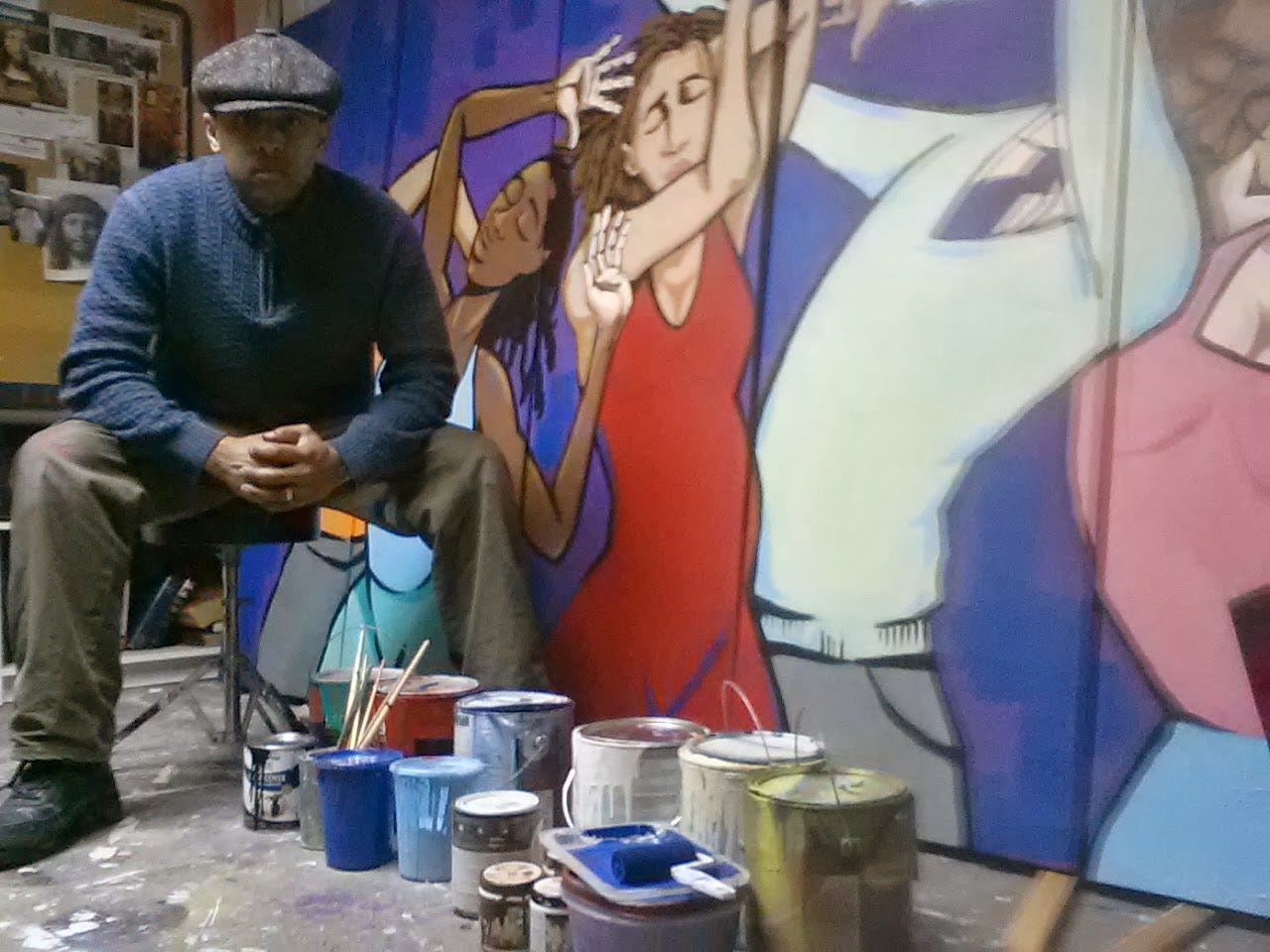
I hadn’t realized I was already using this technique with my work. Every time I finish a painting I write down the number on post it notes and place it in the area where the work is stored. When I go into that space I’m instantly reminded of where I am in my journey. Now I shall add an arrow pointing upward to enhance the reminder and to send a stronger signal to my mind where I am headed.
These past few weeks of being in the middle were an eye-opening experience, but a great reset for my work. It was painful to endure but learning about The Gradient Effect and putting it into perspective in my practice has strengthened my resolve to go at it harder.
You may feel stuck in what you’re doing right now. I empathize with you. I don’t believe in lecturing folks on what they should do in their creative practice or even life. However, I do believe my experience though painful was worth sharing and hopefully it has inspired you to keep pushing forward in your work. What I thought was a flaw in me was just a natural occurrence in the creative process.