Why Bad Ideas Matter When Making Art

Here I am again. Plopped down in front of the computer hoping for a tiny spark to produce a flame. I believe that’s a fare analogy of the creative process. Sometimes starting an essay or even a painting is like attempting to build a fire with no matches. Your initial thoughts are like dried up grass, leaves and twigs. They don’t feel or look like anything significant, but they’re the only thing you got to make something happen. These thoughts are abundant and everywhere, so the idea is to gather indiscriminately. No need to waste precious time evaluating these first thoughts because their sole purpose is to get the fire started.
The first step is to place these thoughts where you desire to start your fire. Whether that’s your document, canvas or the materials you’re working with, you need space where your thoughts can transform into energy. Your first thoughts are what initiates the fire so welcome each one and try not to refuse or judge them. This is where creatives sometimes get stuck and even discouraged. When you judge your ideas too early you begin to believe the pile of dried grass and twigs is the best you can produce. Don’t fall for it. Your initial thoughts are not the fire that will warm the atmosphere. They are the fuel for your creation. If you treat them as anything more than you’ll end up with a mound of smoke.
The next step is the hardest part of the process. It’s where you’ll exert the most effort and concentration. Everyone knows that starting a fire in certain conditions is not as simple as it seems. If you have no matches and you’re rubbing sticks together then you’ll be exerting a fair amount of physical energy to produce a spark. If you’re fortunate and have matches, then you’ll have to be careful to protect the small flame from the wind which often comes unannounced to snuff it out.

Here is where the foundation of your fire begins. It’s the core of whatever you’re creating. It’s where you build momentum and add to make what you create grow. Once your initial collection of thoughts catch fire you can begin to add bigger twigs, sticks and eventually heavier logs. You don’t start a fire with heavy wood because it will resist the young flame and absorb it. Begin with your light ideas. By nature, they are light and shallow but that is perfect. Allow the creative process to consume your lesser thoughts. It’s not waste; it’s the process of building strength so that bigger and more complex ideas may be received.
Sometimes the most difficult part about creating art is the conceptual stage. Whenever I settle myself down to paint or write, it takes time before something meaningful emerges. Ideas are abundant but not always attractive. Within this analogy of building a fire I believe I’ve found the secret of finding great ideas for all my creative pursuits. Whether you’re a painter, writer or musician, start with the obvious and keep engaging until something deeper emerges.

It’s like sitting down and talking with someone you first meet. The conversation begins with basic pleasantries and obvious questions and answers navigating through normal boundaries. The longer the conversation continues, the more intimacy and trust is built. It’s through intimacy and trust that greater ideas and concepts are exchanged.
This is where the fire you build becomes a source of energy that warms, cooks and feeds all who gather around it. What’s amazing is the control you have in keeping this fire alive.
Have you ever noticed how sharing, talking and exposing your work to others causes it to take upon a life of its own?
It’s like tending to the fire by adding more wood to burn and shuffling the coals to produce more heat.
There are times when this process is bypassed. Sometimes lightening strikes and an instant fire will appear. A fire can ignite out of nowhere and cause instant fame and all the glory and perils that are associated with it. Although this seems to be the preferred story pop-culture likes to tell us when it comes to portraying the lives of artists and creatives, it’s rarely the truth.
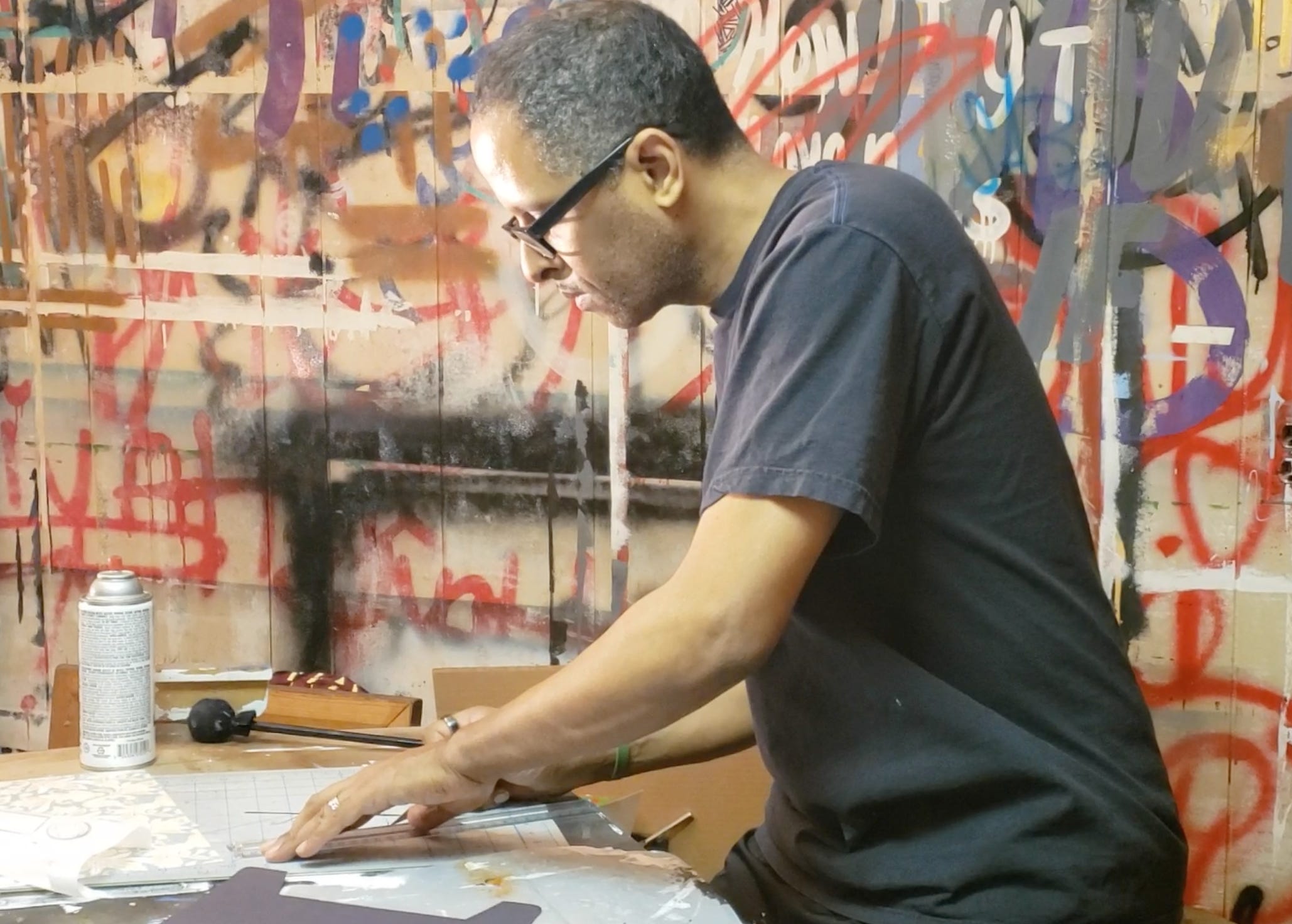
Artists will truthfully say their craftsmanship was the result of a slow and tedious burn. Sometimes their small flame was snuffed out, and they were forced to start all over again. Just as it takes years to build a creative practice, a work of art must be given time to mature in its full expression. Creating fine art is rarely a cookie cutter approach. Even if there are rigorous systems in place to ensure quality and high standards, there are thousands of problems to solve in the simplest piece of art.
The same way one builds a fire and considers where to place fresh wood, an artist must know how to add to or subtract from their design.
To get to that stage of creativity you must be willing to let go of ideas. We sometimes are so beholden by a good or even great idea that we forget it’s but wood to feed the fire. Sometimes we fall in love with an idea that was meant for the fire. When we do so we rob ourselves and others of the energy it was supposed to create for something beautiful. If we never put bigger sticks into the fire the flame will remain small. Those sticks are like our ideas. We’re often tempted to believe our bigger and clever ideas could be used for a greater purpose. Then we put them away for future use. However, so many times throughout my artistic journey I realized when I hoard ideas they are seldom revisited. Eventually ideas treated in this manner die; at best they decay becoming useless.
Building a fire is a work in progress. One must tend to it to keep it alive. I believe it’s the same with creating a work of art. There is a feeding of a spiritual fire where you’re constantly getting ideas then releasing them into the flame. There must be a willingness to let go. Even the ideas you grow fond of often are the ones that you must release. As you become more aware of what to let go and what to keep your maturity as an artist grows. It’s the knowing of what to place in the fire to be burned that you become the artist of your dreams.
I am so grateful for you. Expect a blessing!!!